Showing posts with label animals. Show all posts

Wednesday, April 25, 2012

T is for Tokarz

Andrew Tozarz in tradtional shepherd attire.

Just a couple of years into our farming experience, Beth and I were nearly burnt out, and we considered throwing in the towel and going back to our more conventional careers. Starting any business is stressful and time-consuming. Starting a diverse, sustainable, farm in a sea of corn and soybeans is that, plus it's lonely and isolating.

An early frost, ended our second season of vegetable CSA a couple of weeks early. To be perfectly honest, we were glad of it. That's how exhausted and discouraged we were. Fortunately, we didn't quit. Rather we regrouped and registered for our first farming conference - a CSA conference in Michigan. Although we'd beeen growing a Community Supported Agriculture business for two years and had cultivated a community of eaters, we hadn't tapped into a community of farmers.

The Michigan CSA conference showed us just how collaborative and supportive the people involved in sustainable farming truly are. Not only did we learn a lot about making a CSA work, we, also, learned that we weren't alone in our struggles. Not feeling alone was probably just as important as all the new knowledge we brought back. Beth and I credit that first conference with keeping us in farming.

Still, in our part of Illinois, sustainable farms are few and far between and staying connected in our busyness is not always easy - but it's the connections that keep us going. Over beers one night during the winter of 2008, Larry O'Toole and I concieved the North Central Illinois Farmer Network (aka greenfarmers) to make it easy for farmer like us to connect and support one another. 

So, we started a Yahoo group and invited all the sustainable farmers within a 1 1/2 hour drive to meet at a independent coffee shop in Joliet, IL, which was a central location. We asked everyone to share the invite as widely as they could. One of the farmers that came to that first meeting was Andrew Tokarz.

Andrew lives in Chicago, but he and a group of entrepreneurial Poles operate a cooperative sheep farm in Lemont, Illinois. The members of the group take turns at the farm caring for everyone's sheep (most have other jobs in the city). Andrew's enterprise is dairy sheep (& amazing sheep-milk cheeses) and Polish Tatras (a rare breed of livestock guardian dogs).


Jody with our guardian dogs - Sasha, Sophie, & Harry

At that meeting, we learned that he had a litter of Tatra pups that needed work. As we have every known predator in northern Illinois living (and eating chickens on our farm), it was serendipity. A few weeks later, Sasha and Sophie arrived on the farm. Harry was added last year. We've found them to be incredibly intelligent, friendly to our human visitors, fiercely protective of all our animals. They've definitely earned their kibble over the past four years!


Beth with Sasha.

Thanks Andrew!

Thursday, April 19, 2012

P is for picking up chicks


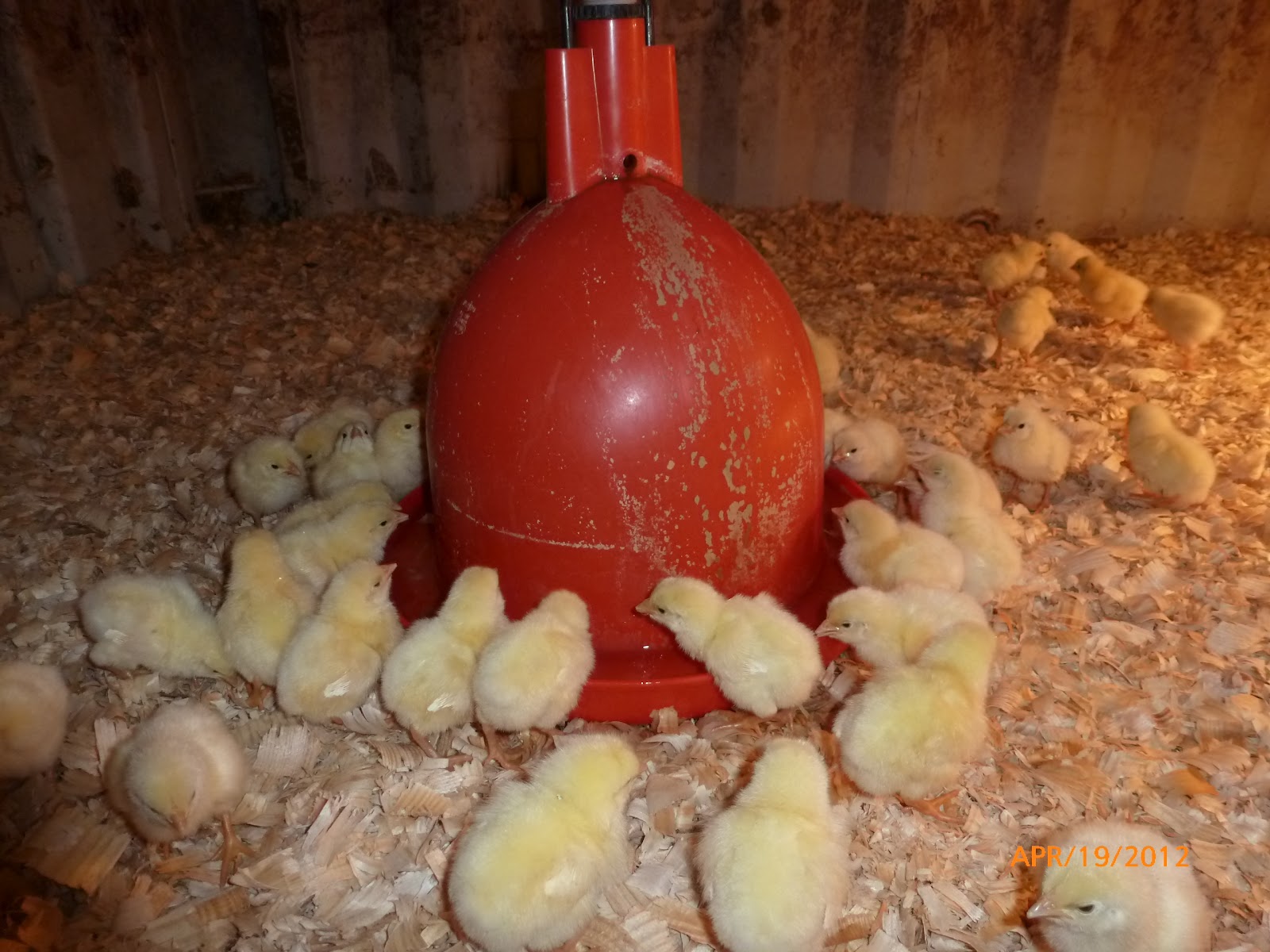
Our first group of  chicks of the season arrive at the farm today!

(Beth is off to pick them up at the post office and will post pics of the process of introducing them to their new home.)

Our chicken season begins with a pre-dawn (5:15 a.m.) call from the local post office letting us know that our chicks have arrived. Yes, just-hatched chicks are sent through the U.S. mail (this practice began in the early part of the 20th century). Security concerns following the 9-11 attacks threatened this practice, but small farmers, backyard chicken keepers,  and hatcheries across the country made thousands of calls to their representatives to preserve this tradition - not to mention a lot of jobs.

Our van backed in to the loading dock at the post office.


The chicken boxes on the post office cart.


Because we pick up hundreds of chicks at a time, we just go to the back of the post office and collect the chicks from the loading dock. We've done this for a number of years, so the post office employees know us well. When Beth picked up this morning they asked, "Where are your helpers?" One or two of our boys usually ride along when we pick up the chicks. They were at grandma and granpa's house this morning.

Beth taking a couple boxes of chicks from the van.


Today's order was for 800 meat birds. That's eight boxes (100 chicks each)! As it gets hotter, the number of chicks per box will decrease. Day old chicks need to be at about 90 degrees. Hatcheries gauge packing density by predicted temperatures during shipping and are amazingly good at keeping chicks healthy. In nearly ten years of getting chicks in the mail, we've only had one bad experience - this happened when there was a sudden spring cold snap during transport.


Beth taking chicks into the brooder.

Since we've been brooding our chicks in six sided steel boxes four years ago, we've not lost any chicks to predation during brooding! Thanks Frontera Farmer Foundation for funding this project, it has certainly been successful.

A box of chicks ready to get out.


Jody showing the chicks their waterer.


When chicks arrive it is critical that they get water. We hand-dip each chick's beak into the water bowl, so they get a drink and know where the water is.


Jody demonstrating how to hold a chick safely.


Chicks at the water bowl.

A box of chicks is almost as cute as a box of kittens!


Here are chicks discovering the feeder.

Wednesday, April 11, 2012

J is for Jack


Jack is our youngest, but is quite easily the most enthusiastic about farming. A couple of months ago he told me: "Dad, when I retire from being a pro soccer player, I want to be a farmer just like you."


 Whether it's helping pick eggs, feeding the pigs or moving the cows to a new pasture, Jack wants to help. If I have tractor work to do, he rides along. When I go to pick up feed or farm supplies, Jack rides with. The whole time is filled with questions about what, why, and how we do things. In his nearly six years, Jack has absorbed an incredible amount of knowledge about our sustainable farm.

Last year, at the end of a long day in Springfield for the Local Food Lobby Day, Jack and his brothers insisted that they come along to our meeting with Lieutenant Governor Simon.


All our boys are emeshed in our farming enterprise with Jack most of all.


Monday, April 2, 2012

B is for Butcher

Okay, we run a meat CSA - that's community supported agriculture. (If you're new to this and would like to learn more our farm and CSA visit us at Cedar Valley Sustainable Farm. If you'd like to find a CSA in your area got to Local Harvest. If you're in Chicago, visit The Local Beet.)

Raise our animals in ways that nurture their true natures. We're mindful that their well being is dependent upon us, just as our sustenance is dependent on them. It is a relationship grounded with respect and reverence.

But, to become the nourishing goodness that goes into our monthly shares, their lives must end. We take great care with our animals and work to ensure that the same care is taken when they become meat.

Luckily, we have a fantastic  butcher who does his job as thoughtfully as we do ours. His name is Scott Bittner.


Scott runs the only buthcher shop in the state of Illinois that can do certified organic butchering for red meat animals (beef, pork, lamb, goat). Although we are NOT a certfied organic farm, this is important to us and our customers as it means that only organic methods and ingredients are used in the processing of our meats (no MSG, added nitrates etc).

Bittners (Scott and his wonderful staff) are an important part of our farm's community, and we appreciate all they do!